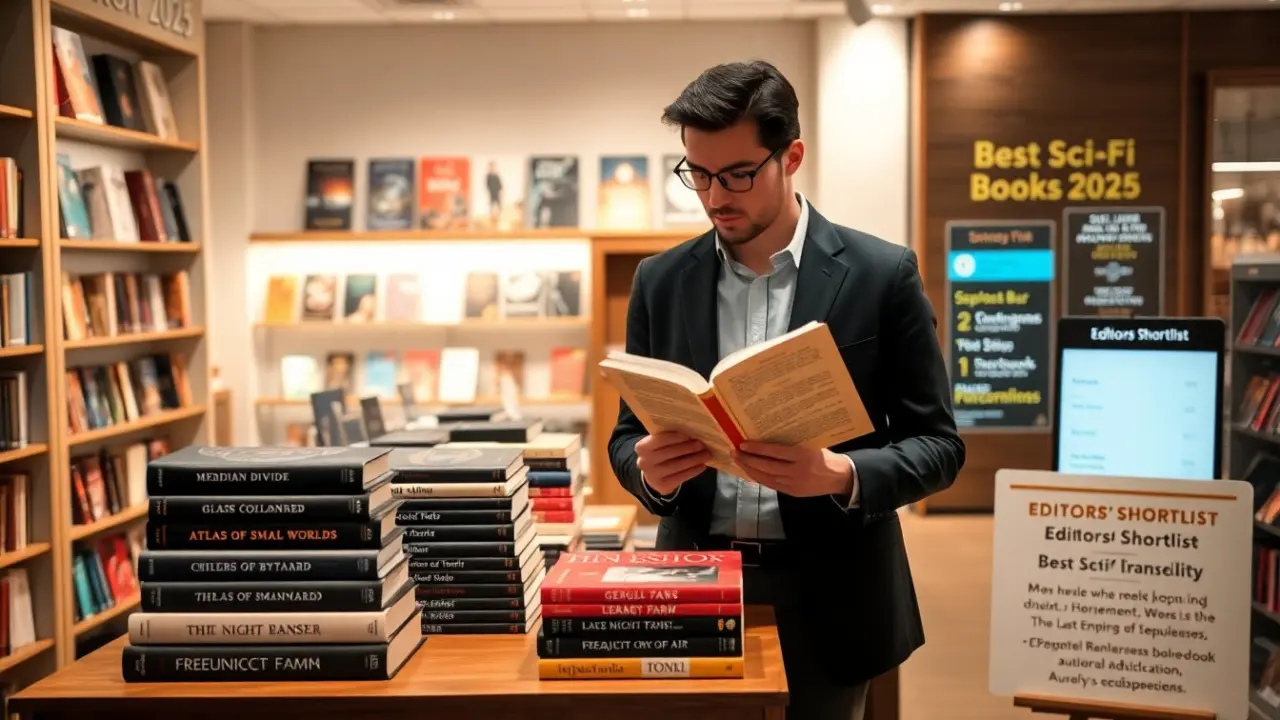
The list of best sci fi books 2025 highlights new directions in genre fiction. Critics praised these novels for bold ideas and strong characters. Readers found fresh settings and clear stakes. This article summarizes the shortlist, explains what made each title stand out, and shows how to pick the right 2025 sci‑fi read. Below you’ll find more context on why 2025 mattered, a detailed shortlist with what each work offers, practical selection advice, where to find different formats and deals, and which emerging authors and trends are likely to shape the next few years of science fiction.
Key Takeaways
- The best sci fi books 2025 showcase bold ideas and strong characters, blending science with human drama effectively.
- Critics and readers praised novels that explore urgent ethical questions and push genre boundaries in 2025 science fiction.
- Choosing the right 2025 sci-fi read depends on personal preference for themes, pacing, and character focus, with resources like libraries and book clubs aiding selection.
- Multiple formats—including print, ebook, and audiobook—offer flexible options to access the best sci fi books 2025, with libraries and subscription services providing valuable deals.
- Emerging authors from diverse backgrounds are shaping the future of sci-fi with fresh perspectives on climate, AI, and social systems, signaling exciting trends in the genre.
Why 2025 Was A Breakout Year For Science Fiction
Publishers released many daring works in 2025, and editors backed risky concepts. Authors fused science and human drama in ways that felt both timely and imaginative: climate collapse and adaptation moved beyond backdrop status to become central plot engines; AI and algorithmic governance were treated less as gimmicks and more as living institutions with consequences for everyday life. Critics rewarded novels that combined rigorous thought experiments with emotional depth, which helped the books cross over into mainstream literary coverage. Readers embraced stories that asked urgent ethical questions—about care, surveillance, belonging, and responsibility—rather than offering only spectacle.
Several market forces amplified the year’s impact. A growing indie press scene invested in mid‑length work and novellas, creating room for riskier ideas; audiobook production values rose, making narrated editions more compelling; and adaptations—both announced and released—drove discovery across streaming platforms, social media, and book clubs. These dynamics widened readership for speculative titles and encouraged established authors to experiment. Together, they explain why many consider the best sci fi books 2025 to mark a turning point: the genre expanded both in thematic ambition and in the diversity of voices telling those stories.
Top 10 Sci‑Fi Books Of 2025 (Shortlist And What Makes Each One Special)
- Meridian Divide — The novel pairs hard science with a tense personal story. It explores climate tech and moral tradeoffs through procedural detail and character choice, balancing accessible explanations of speculative engineering with a protagonist whose relationships complicate every technical decision.
- Glass Colony — The author builds a tight plot about memory law and civic control. Sharp, economical prose keeps momentum while raising questions about consent, archives, and what states can claim as public property when personal recollection becomes evidence.
- Signal Orchard — The book uses first‑person voice to show a society shaped by signal mining. Written as a partly epistolary work, it foregrounds privacy, labor, and extraction in digital landscapes and excels at rendering complex systems through small human failures.
- Atlas of Small Worlds — The writer creates detailed microeconomies and vivid characters. Through interlocking vignettes, the novel traces how local markets, barter networks, and cultural rituals adapt to technological shocks while keeping the stakes human and intimate.
- The Last Engineer — The novel centers on a flawed inventor who must choose between repair and revolution. It interrogates repair culture, obsolescence, and the moral weight of creators who build systems that outlive their intentions.
- Children of Binary — The story shows a generation raised by algorithms. It keeps the moral focus on growing up under conditional love and curated identity, exploring how predictive tools shape education, friendship, and dissent.
- Blue Night Transit — The plot moves quickly across cities and one moral dilemma. Its kinetic pacing and urban noir flavor make it a lean, propulsive read for readers who prefer plot-forward, atmospheric sci‑fi.
- Frequency Farm — The author imagines new biotech for food. Combining ethnography and speculative design, the narrative connects invention and community, examining who benefits from new agricultural technologies and who is left out.
- The Quiet Satellite — The book studies long‑term loneliness in orbit. With spare, intentional prose, it explores isolation, mission ethics, and the bureaucratic machinery that shapes how societies understand sacrifice in extended space endeavors.
- The Measure of Air — The novel combines law, data, and grief. Through courtroom scenes, civic archives, and intimate family moments it asks how societies quantify loss and how metrics can both illuminate and obscure human suffering.
Each entry on this shortlist earned strong blurbs and wide reader response. Reviewers listed several titles among the best sci fi books 2025. Collectively, these works demonstrate the year’s thematic range: rigorous worldbuilding, intimate character studies, institutional critique, and experiments with form (novella cycles, interleaved timelines, and mixed‑media storytelling). If you want the common thread, it is a focus on consequences—how technologies reshape responsibilities, labor, law, and care.
How To Pick The Right 2025 Sci‑Fi Read For Your Tastes
Readers should pick by theme and pacing, but a few practical steps make selection easier. First, identify what you want most: intellectual provocation, emotional immersion, fast plotting, or world‑building detail. If big ideas matter, look for novels that foreground systemic questions—AI governance, climate adaptation, bioethics. If character work is key, prioritize books with interior narration, slow reveals, or relationship‑driven conflict. If you want action, seek out shorter chapters, clear stakes, and propulsive structure.
Use format and excerpt strategies: sample the first chapter in ebook previews, listen to a short audiobook excerpt to check narration style, or read a magazine excerpt for tone. Libraries and book clubs can introduce you to denser works with shared discussion; many groups schedule a novella or short cycle as a lower‑time commitment starting point. Consider length and commitment: novellas and interlinked short‑fiction collections are great for testing new authors, while epic‑scale novels reward readers ready for sustained immersion.
Finally, refine by subgenre and mood. Want near‑future social realism? Look for contemporary settings with a single speculative twist. Prefer cosmic scale? Seek novels with long timeframes and systemic payoff. For a balanced shortlist of the best sci fi books 2025 tailored to you, combine these filters: theme + pace + format + length.
Where To Buy, Borrow, Or Listen: Best Formats And Deals For 2025 Releases
Bookstores stocked new releases at launch in 2025; many independent shops hosted readings, signing events, and small panels that let readers meet authors and buy signed or special editions. For collectors, limited press runs and special bindings appeared from niche publishers. Online retailers listed preorders, bundled sales, and occasional retailer exclusives; if you prefer shopping digitally, preorder windows often included early sample chapters or bonus short stories from the author.
Libraries expanded both physical and digital holdings. Many public systems increased simultaneous‑use licenses for popular audiobooks and ebooks, and interlibrary loan or hold systems made it possible to access buzzed‑about titles without purchase. Audiobooks reached wide audiences through major platforms and library apps; production quality improved, and many narrators were singled out for elevating the material. Subscription services—whether for audiobooks, ebooks, or curated monthly boxes—offered savings for voracious readers, while indie stores and direct‑to‑publisher sales sometimes bundled signed copies with short zines or author notes.
Practical tips: check library apps for immediate loans before buying; compare ebook discounts and price‑match policies across retailers; preview audiobook clips to ensure you like the narrator; and watch publishers’ newsletters for short‑term promotions or author events that include discounted copies. These options help readers access the best sci fi books 2025 in the format that fits their budget and reading habits.
Emerging Authors And Trends From 2025 To Watch Next
New authors gained attention in 2025 for clear plotting, distinctive voice, and an inclination to mix modes—journal entries, legal documents, and multimedia fragments—into novels. Many came from diverse geographic and professional backgrounds, bringing fresh angles on climate adaptation, AI ethics, public health, and infrastructure. Small presses and indie imprints continued to champion riskier concepts and mid‑length works, which let younger voices build audiences without the pressure of blockbuster sales.
Notable trends to watch going forward include: a rise in collaborative projects that pair writers with technologists or visual artists; more fiction that treats institutions (hospitals, courts, platforms) as characters in their own right; an increase in platform‑native serial publishing—short, frequent installments that later collect into a volume; and continued growth of novellas and short cycles as accessible entry points. Editors are also attentive to stories that center repair, care economies, and non‑Western futurisms—angles that expand what we mean by “the future.”
For readers wanting to follow the next wave of the best sci fi books 2025 and beyond, pay attention to small press catalogs, emerging author lists in literary journals, and seasonal shortlists. Book clubs and online communities remain good places to discover up‑and‑coming names early, and following the reading lists of critics and organizations that focus on speculative work will point you toward the authors most likely to define the next chapter of the genre.