Space sim games place players in starships and let them fly, fight, trade, and explore. The guide explains core mechanics, top picks for 2026, and how to start with the right hardware. It aims to help readers choose a game that fits their play style. It uses clear steps and practical tips to get players from first launch to deep-space missions.
Key Takeaways
- Space sim games combine flight, combat, trade, and exploration with core mechanics like ship customization and mission systems to create immersive experiences.
- Top space sim games in 2026 include Elite Dangerous for multiplayer, Starfield for narrative exploration, No Man’s Sky for procedural worlds, and indie titles like Everspace 2 for focused gameplay.
- Strong developer support with updates, expansions, and mod communities extends the lifespan and engagement of space sim games.
- Choosing the right hardware like HOTAS setups and setting suitable difficulty levels enhances enjoyment and skill development in space sim games.
- Beginners should focus on tutorials, stable ships, and community resources to master core mechanics and avoid early frustration.
- Space sim games appeal to diverse players thanks to subgenres ranging from flight sims to trading and exploration, allowing tailored gameplay experiences.
What Makes A Great Space Sim: Core Mechanics And Subgenres
A great space sim game balances flight, progression, and reward. Flight controls must feel responsive. Combat must offer choices in tactics and loadouts. Trade systems must reward planning and risk. Exploration must present meaningful discoveries and navigation tools.
Space sim games often split into subgenres. Flight sims emphasize realistic physics and control. Action sims focus on arcade combat and fast pacing. Trading sims center on economy and cargo runs. Exploration sims center on discovery and mapping. Hybrid sims mix these elements.
Designers use several core mechanics across subgenres. Newtonian or simplified physics affects movement and strategy. Ship customization allows role specialization. Mission systems guide progression and create goals. Economy systems create incentives and scarcity. Procedural generation expands content without adding manual work.
Players value clear feedback and predictable rules. A useful HUD shows speed, threat, and destination. A readable map shows routes and risks. Save and difficulty options let players learn and adapt. Community mod support extends game life. Accessibility options widen the player base and reduce friction.
Best Space Sim Games To Play In 2026 (Single-Player, Multiplayer, Indie)
Elite Dangerous remains a major multiplayer choice in 2026. It offers a persistent galaxy, real player economy, and regular updates. Players join factions, run trade routes, or hunt pirates. The game supports VR and large-scale open play.
Starfield appeals to single-player explorers who like narrative and base building. The game offers detailed planets, ship interior control, and mission variety. It gives players structured stories alongside freeform travel. Mods further expand mission and ship options.
No Man’s Sky provides exploration with an emphasis on discovery and base construction. The game uses procedural worlds to create near-infinite variety. Regular updates added multiplayer features, base parts, and quality-of-life improvements. It now serves both solo and cooperative players.
Indie picks like Everspace 2 and Hardspace: Shipbreaker offer focused gameplay loops. Everspace 2 delivers fast action and strong loot progression. Hardspace: Shipbreaker gives methodical salvage tasks and unique physics puzzles. Both games fit players who seek shorter, skill-focused sessions.
Fans of hardcore simulation still choose Kerbal Space Program 2 for realistic rocket design and orbital mechanics. It teaches orbital transfer and delta-v planning while letting players experiment with custom rockets and missions.
Space sim games thrive when developers support them after release. Active dev teams add content, fix bugs, and listen to players. That support often determines whether a game remains relevant in years.
Community Mods, Expansions, And Long-Term Support
Communities create powerful mods that change visuals, add ships, and overhaul systems. Players install mods to improve realism, add missions, or fix missing features. Mod support often keeps older titles active and brings new players.
Expansions add official content and widen scope. Developers release expansions to add storylines, regions, or mechanics. Players often judge a space sim game by post-launch content frequency. Regular expansions keep progression fresh and preserve player interest.
Long-term support includes patches, balance changes, and new events. Developers who patch quickly keep gameplay fair. Balance changes improve player retention by fixing dominant tactics. Seasonal events and limited-time missions reengage players.
Players benefit from community resources. Guides, ship builds, and trade route lists reduce learning time. Mod lists and compatibility guides prevent conflicts. Players should back up saves before applying large mods. They should also read mod install instructions carefully.
How To Pick And Get Started: Hardware, Difficulty, And Beginner Tips
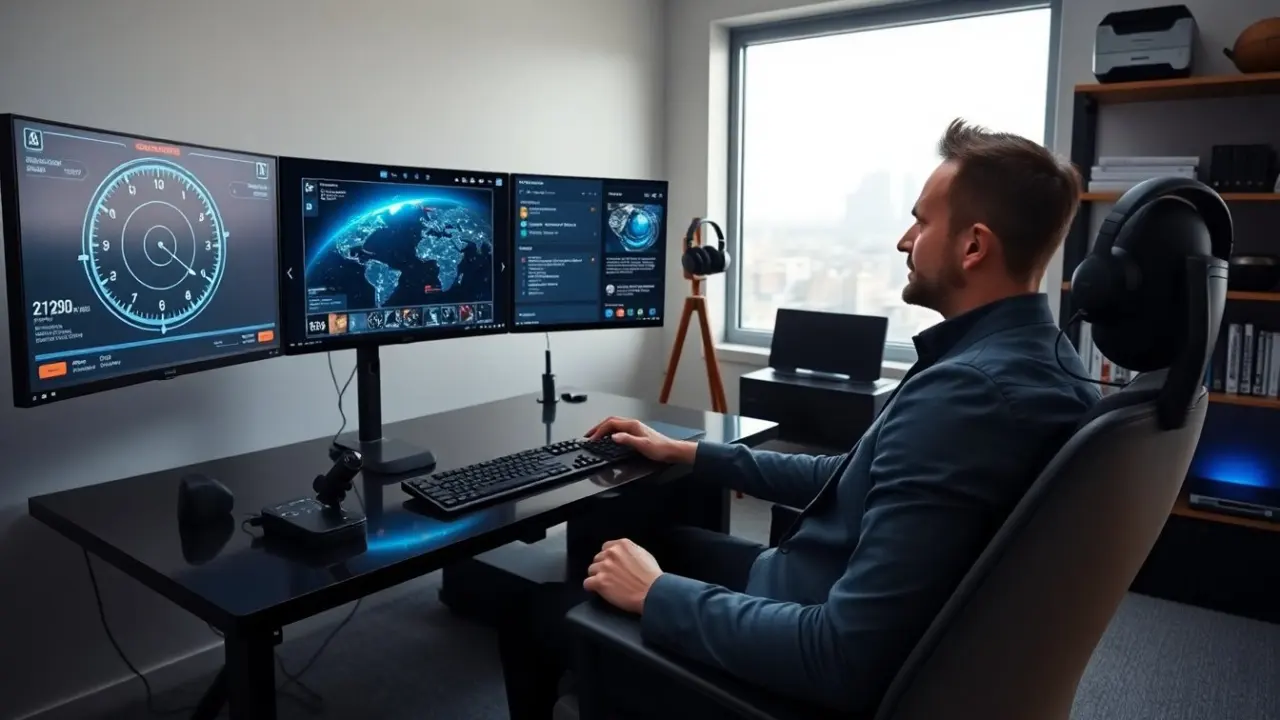
Players should match hardware to goals. A basic setup includes a stable PC and a good monitor. VR or triple-monitor setups increase immersion but require more power. A gamepad works for casual play. A HOTAS (hands on throttle-and-stick) improves control for serious players.
Players should set difficulty to learn core mechanics. Easy modes teach flight and combat rules. Normal modes test skills and economy understanding. Hard modes add realistic physics and scarce resources.
Beginner tips reduce early frustration. Start with tutorials and early missions. Practice docking, throttle control, and targeting in low-risk zones. Use the map to plan routes and avoid high-threat systems. Accept small losses to learn faster.
Ship choice shapes early experience. Choose ships with stable handling and balanced loadouts. Avoid expensive ships until the player masters basic skills. Invest in sensors and shields before buying bigger weapons.
Budget for accessories that improve play. A quality headset improves situational awareness. A controller with analog triggers helps throttle control. Spare storage space helps with large installs and mods.
Players should join communities for advice. Forums and Discord servers share tips, trading routes, and mission help. Learning from veterans accelerates progress and reduces wasted time.